Table of Contents
ToggleHard water is one of those silent home problems that sneaks up on you, mineral buildup in your pipes, soap scum on your shower walls, and that feeling of never quite getting clean. If you’re dealing with hard water, a quality water softener system can transform everything from your skin and hair to your appliances’ lifespan. The best water softener for your home depends on your water hardness level, household size, budget, and whether you want salt-based or salt-free technology. In this guide, we’ll walk through what to look for, our top picks across different budgets, installation essentials, and how to keep your system running smoothly. Whether you’re a DIY install enthusiast or planning to hire a pro, you’ll find the information you need to make a smart choice.
Key Takeaways
- The best house water softener depends on your water hardness level (GPG), household size, and budget—salt-based systems are most effective and affordable upfront, while salt-free models require no salt refills but cost more initially.
- A typical family of four with moderate hardness needs a 40,000 GPG metered system ($1,200–$1,800) that regenerates based on usage and is more efficient than timer-based alternatives.
- Proper water softener installation near your home’s water main before hot/cold lines branch, combined with monthly salt refills and occasional resin cleaning, keeps your system running strong for 10+ years.
- Water softening extends appliance lifespan by 20–40% and improves skin and hair health, while the long-term cost of ownership (equipment, installation, and maintenance) typically pays for itself within 7–10 years.
- Common issues like low water pressure, musty odors, or incomplete regeneration can be solved with simple maintenance—run cleaning cycles, check bypass valves, and refill with quality softener-grade salt pellets.
- Budget-friendly options start at $600–$1,000 (basic timer-based 24,000 GPG), mid-range choices hit $1,200–$1,800, and premium systems with smart controls cost $2,000–$3,500 plus $400–$800 installation labor.
What to Look For in a Water Softener System
Key Specifications to Know
Before shopping, understand these core specs. Grain capacity (measured in grains per gallon, or GPG) tells you how much hardness the system removes before needing regeneration. A typical family of four with moderately hard water (around 10 GPG) needs a system with 30,000 to 50,000 grain capacity. Your water hardness level is the starting point, get it tested with an inexpensive kit or through your local water utility.
Flow rate is how many gallons per minute the system delivers. You want at least 15 GPM for whole-house use so showers, laundry, and dishwasher don’t fight for water. If you have multiple bathrooms or heavy water usage, aim higher.
Salt-Based vs. Salt-Free Systems
Salt-based softeners use ion exchange to swap hard minerals (calcium and magnesium) for sodium, then regenerate with salt. They’re the most effective and least expensive option upfront. The trade-off: you’ll add salt periodically, and some people object to the sodium in softened water (though amounts are usually small).
Salt-free systems use alternative media or rely on template-assisted crystallization to prevent mineral buildup without removing hardness. They cost more but require no salt refills and produce no brine discharge. But, they’re less effective on very hard water and won’t give you that “silky” water feeling some people prefer.
Tank Size and Space
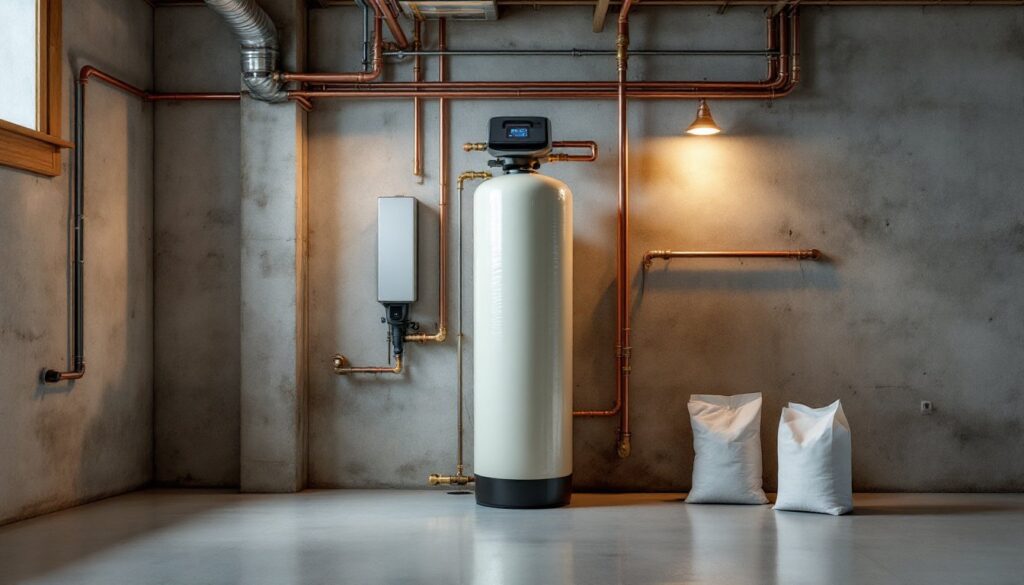
Whole-house units typically come in 30-inch to 48-inch-tall tanks. Measure your basement or utility room carefully, these sit on the floor and need clearance for the brine tank or salt hopper. Smaller point-of-use softeners (under your sink or on a single fixture) take up less space but only soften water at that location.
Regeneration Type
Metered systems regenerate based on water usage and are more efficient for variable household sizes. Timer-based systems regenerate on a schedule, which wastes water during light-use weeks but guarantees fresh resin if you have a stable routine.
Our Top Water Softener Recommendations
High-Capacity Premium Option
If you have hard water, a large household, or want the best results, a 64,000 GPG metered salt-based system delivers. Models like Whirlpool and Culligan’s top-tier units offer smartphone app monitoring and alert you when salt is low. Yes, they cost $2,000–$3,500 installed, but they handle extreme hardness and high flow demand without compromise. Most come with a 10-year warranty on the tank.
According to hard facts about water softening, proper water softening extends appliance life by 20–40% and improves skin and hair health, so the investment often pays for itself over time.
Mid-Range Reliable Choice
For a family of three to five with moderate hardness (8–12 GPG), a 40,000 GPG metered system hits the sweet spot. Brands like Fleck and Pentair offer solid performance at $1,200–$1,800. These systems are efficient, relatively compact, and don’t require professional regeneration, just add salt when needed.
Budget-Friendly Option
If you’re renting, testing the waters, or on a tight budget, a timer-based 24,000 GPG system from brands like Morton or Diamond Fresh runs $600–$1,000. They’re not as efficient as metered units, but they work and last 10+ years with basic maintenance. Installation DIY is possible with plumbing basics: otherwise, expect $300–$600 in labor.
Salt-Free Alternative
For light-to-moderate hardness and low maintenance, a salt-free crystallization system like Aqua-Pure or GE’s non-salt models costs $1,500–$2,500. No salt trips to the hardware store, and no brine discharge means less environmental impact. They’re quieter and visually cleaner but won’t soften water below 6–8 GPG.
When evaluating options, homeowners often consult cost guides and contractor reviews to compare installation quotes and verify system performance in their region.
Installation and Maintenance Basics
DIY vs. Professional Installation
If you’re comfortable with basic plumbing (soldering copper or using PEX fittings) and your home has accessible water main lines, DIY installation is doable. Most systems come with detailed instructions. You’ll need to shut off water, cut the main line, install a bypass valve, connect inlet and outlet ports, and route the drain line to a floor drain or sink.
But, if you have a well, a water heater in line, or local code requires a licensed plumber (some jurisdictions do), hire a professional. A licensed install ensures proper valve orientation, optimal system positioning, and warranty compliance. Budget $400–$800 for professional labor.
Placement and Plumbing
Install the softener near your water main, before it branches to hot and cold lines. The system needs a floor drain or a sink drain line (brine and rinse water exit during regeneration). Most units draw about 5–10 amps, so a dedicated outlet is smart but not always required. Ambient temperature should stay between 40–120°F: a heated basement or utility room is ideal.
Use brass or stainless fittings to avoid corrosion. Galvanized or iron fittings can rust and clog the system. If you’re soldering, wear safety glasses and a respirator to avoid fume exposure.
Monthly and Annual Maintenance
Once installed, maintenance is minimal. Check and refill your salt hopper monthly, don’t let it run dry, as that triggers a regeneration cycle on resin with no brine. Use softener-grade salt pellets or tablets (not rock salt), which are higher purity.
Every 3–5 years, clean the brine tank and inspect the resin bed for fouling (minerals or sediment buildup). If water flow drops or you smell rotten eggs, the resin may need cleaning. Most systems let you run a “sanitize” cycle with a commercial cleaner to restore efficiency.
Common Maintenance Mistakes
Don’t skip the bypass valve, it isolates the softener during repairs. Always turn it off before opening any ports. If you drain the system for repairs, you’ll need to regenerate before use. And never use hot water to refill a salt tank: cold water is easier to pump and protects the tank liner.
Cost Considerations and Budget Options
Equipment Costs
Water softener prices vary widely based on capacity and brand. A basic timer-based 24,000 GPG unit runs $500–$1,000: a metered 40,000 GPG system costs $1,200–$1,800: and a premium 64,000 GPG with smart controls hits $2,000–$3,500. These are equipment-only prices before installation.
Salt-free systems are pricier upfront ($1,500–$2,500) but save on recurring salt costs, a 40 lb. bag of softener salt costs $8–$15 and lasts 1–3 months depending on hardness and household size.
Installation Costs
If you hire a plumber, expect $400–$800 in labor (varies by region and complexity). Some retailers bundle installation with purchase, which can reduce overall cost. Check your local market on HomeAdvisor’s cost estimator to compare quotes in your area.
Long-Term Operating Costs
Salt-based systems cost roughly $15–$25 per month in salt for a family of four, or $180–$300 per year. Add occasional service calls ($100–$300) if resin cleaning is needed. Over 10 years, total cost of ownership for a mid-range salt system is roughly $3,000–$4,500 including equipment, installation, and maintenance.
Salt-free systems eliminate salt costs but may have longer filter replacement intervals (every 1–3 years, $200–$600) depending on design. The break-even point is usually 5–7 years if you stay in your home long-term.
Financing and Rebates
Some utilities offer rebates for softener installation (typically $200–$400) to reduce water waste. Check your local water authority’s website. Several retailers finance systems at 0% for 12–24 months, which eases the upfront hit on your budget.
Common Water Softener Problems and Solutions
Loss of Water Pressure
If flow drops suddenly, the resin bed likely has sediment or iron buildup. Run a clean cycle using a commercial resin cleaner (available at hardware stores). If pressure is low everywhere in the house, the inlet filter screen may be clogged, shut off water, open the inlet port, and rinse the screen with fresh water.
Musty or Sulfur Odor
A rotten-egg smell means anaerobic bacteria are growing in the brine tank. Empty the salt hopper and tank, scrub with a stiff brush and water, and refill with fresh salt. If the odor persists, the resin itself may need replacement (a $300–$500 job, or a sign your system is nearing end of life).
Salty Taste in Softened Water
This happens when the regeneration cycle is incomplete or the bypass valve isn’t fully engaged. Check the bypass handle, it should be fully perpendicular to the water line. If taste persists, regenerate manually and monitor the cycle. If softened water still tastes salty after a full cycle, contact the manufacturer.
System Won’t Regenerate
If the timer-based system doesn’t trigger regeneration, check the timer settings and ensure the power outlet is live. For metered systems, confirm the flow meter is clean and the electrical connection is secure. If neither helps, the control valve may be stuck, this usually requires professional service.
Cloudy or Discolored Water
Short-term cloudiness after regeneration is normal (air in the lines). Run cold water for a few minutes. If water stays cloudy or turns orange/brown, iron bacteria or rust may be present. A sediment pre-filter before the softener solves this: it’s a $200–$400 addition but protects the resin from damage.
Salt Not Depleting
If your salt never seems to lower, the system may not be regenerating, check your meter reading or timer. Alternatively, the resin might be exhausted and won’t soften, so water just passes through unused. This requires professional resin replacement.
Conclusion
Choosing the right water softener means matching your water hardness, household size, budget, and maintenance tolerance. Start by testing your water hardness and flow rate, then decide between salt-based efficiency and salt-free convenience. Whether you go DIY or hire a pro, proper installation and routine salt refills keep your system running strong for 10+ years. The payoff, softer skin, cleaner dishes, longer appliance life, and no more mineral stains, makes the investment worthwhile. Get quotes, check warranties, and don’t skip the prep work.