Table of Contents
ToggleSmall flying insects buzzing around the kitchen or bathroom are more than just annoying, they’re a sign something’s off in the home. Fruit flies, fungus gnats, and drain flies are the usual culprits, and they multiply fast. A single female can lay hundreds of eggs in just days, so the longer they stick around, the worse the infestation becomes. The good news? Getting rid of tiny flies doesn’t require expensive fumigation or harsh chemicals. With the right identification, targeted source elimination, and a few simple traps, most homeowners can tackle the problem themselves in a week or two.
Key Takeaways
- Identify the type of tiny flies in your home—fruit flies, fungus gnats, or drain flies—since each species breeds in different locations and requires targeted elimination.
- Eliminate the source by cleaning drains with boiling water, securing trash cans, repotting wet plants, and removing food debris, as traps alone won’t solve the problem if breeding sites remain.
- Set up simple DIY traps using apple cider vinegar, dish soap, and a shallow bowl to catch fruit flies within 24 hours, replacing every 2-3 days for best results.
- Deep clean all surfaces, drain lines, and areas where food residue hides—including sink seals and spaces under appliances—to prevent survivors from establishing new colonies.
- Prevent future infestations by storing ripe fruit in the refrigerator, taking out trash twice weekly, fixing water leaks, and inspecting new plants before bringing them indoors.
Identify What Type Of Tiny Flies You’re Dealing With
Before jumping to solutions, nail down exactly what’s flying around. Fruit flies are the most common, tiny (about 1/8 inch), tan or reddish-brown, and drawn to fermenting fruit, vegetables, and liquids. They often hover near kitchen counters or trash cans. Fungus gnats are smaller, darker, and have longer legs: they live in moist soil and potted plants indoors. Drain flies, also called moth flies, are fuzzy-looking and emerge from plumbing, typically near sink drains or shower floors.
Spotting the difference matters because the source changes depending on the species. Fruit flies need decaying food or liquid fermentation. Fungus gnats breed in wet soil. Drain flies need standing water in pipes or underneath fixtures. Get this right, and you’ve already won half the battle. Take a closer look with a magnifying glass or your phone’s macro camera if you’re unsure, then match the description to what you see.
Find And Eliminate The Source
This step separates a temporary fix from a lasting one. Traps catch flies, but unless the source is gone, new ones will just keep appearing. Start with the obvious: check under the sink, inside drains, and at the base of the garbage disposal. Pour boiling water down kitchen and bathroom drains to kill larvae and eggs hiding inside. Don’t skip the overflow hole in sinks, flies breed there too.
Next, inspect all trash cans and recycling bins. Rinse containers before tossing them, and use bins with tight-fitting lids. Check the compost if you keep one indoors: consider moving it outside or switching to a sealed countertop model. Scan every potted plant for standing water at the soil surface, fungi and gnats love that environment. If soil stays wet, repot with fresh, dry soil or let it dry out between waterings.
Look behind and under appliances where spills can hide. Refrigerators, microwaves, and coffee makers are common breeding grounds. Pull them out, wipe down the floor and walls, and seal any cracks or gaps where water pools. Don’t forget fruit bowls, recycling stacks, and pet food dishes. A single rotting apple or a few kibbles in standing water can sustain an entire colony.
Quick DIY Traps And Baits
Once the source is addressed, traps speed up the cleanup. These work best as a complement to source elimination, not a replacement for it. Build these in minutes with items already in the kitchen.
Apple Cider Vinegar Trap
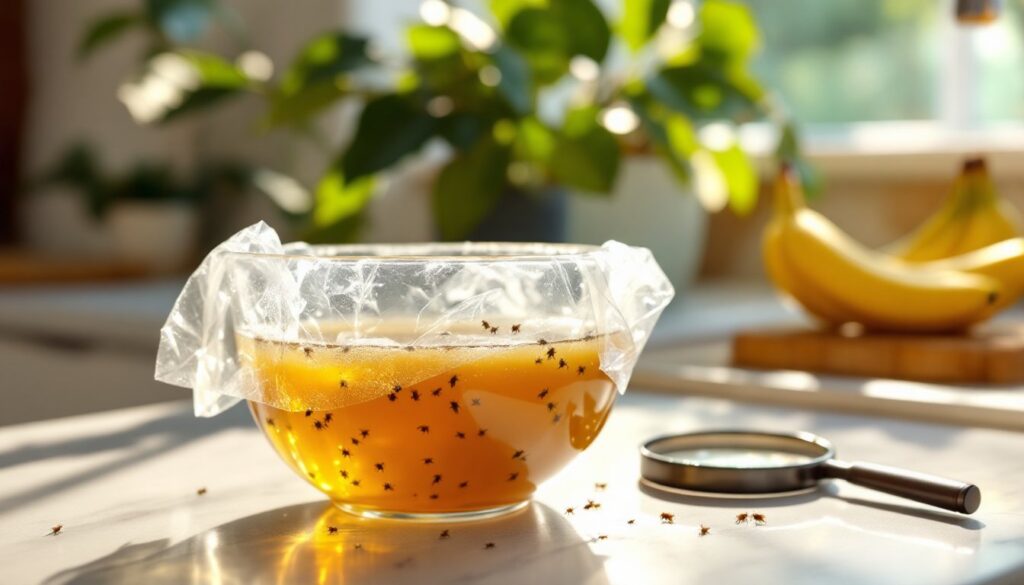
Mix 1 cup of apple cider vinegar with 1 tablespoon of sugar and a few drops of dish soap in a shallow bowl or cup. The vinegar attracts fruit flies (they can’t resist fermenting fruit), and the soap breaks the surface tension so they sink and drown instead of landing and flying away. Cover the bowl loosely with plastic wrap, then poke several small holes (about the size of a pencil tip) in the top. Flies get in easily but struggle to find their way out.
This trap works within 24 hours and works well for fruit flies. According to experts on how to kill fruit flies fast, vinegar-based solutions are among the most reliable options. Replace the trap every 2–3 days or when it’s covered in dead flies. Leave it out during the day and evening when activity peaks.
Wine Or Beer Trap
If vinegar isn’t handy, use leftover wine or beer in the same way. The fermented smell pulls flies in even faster than vinegar. Pour 1–2 inches of wine or beer into a jar, add a drop or two of dish soap, and cover with a paper cone. Roll a piece of paper into a cone shape, tape it, and stick the narrow end into the jar. Flies crawl in but can’t navigate back out.
These traps work for 3–5 days before the liquid evaporates or gets too full of flies. Some people skip the cone and just leave an open glass with a rubber band and plastic wrap setup, both approaches work. The key is the soap: without it, flies will land, feed, and escape.
Deep Cleaning Strategies
After traps are set, a thorough cleaning prevents the survivors from finding new breeding spots. This takes time but pays off in a fly-free home.
Start with a drain cleaning routine. Remove visible debris from sink strainers, then flush drains with hot water and a drain cleaner. Enzymatic drain cleaners or a baking soda and vinegar combination (1/2 cup baking soda followed by 1/2 cup vinegar, let it sit for 15 minutes, then flush with hot water) work safely and break down the sludge where larvae hide. Plunging a drain also helps dislodge organic buildup. Repeat this every few days for a week. For stubborn drain fly issues, a commercial drain gel designed for larvae removal may be necessary, these stay in contact with breeding areas longer than liquid drain cleaners.
Clean all surfaces where fruit or food residue could linger. Wipe down counters, stovetops, and inside cabinets with a damp cloth and mild soap. Don’t forget the seals around the garbage disposal where bits accumulate. Empty, rinse, and dry all food-contact areas daily. Wash dishes immediately instead of letting them sit in the sink.
Repotting houseplants with fresh, dry soil eliminates fungus gnat breeding grounds fast. If plants need regular moisture, let the top inch of soil dry between waterings. Move plants away from walls and windows so air can circulate underneath pots and dry out drainage saucers. Consider elevating pots on small stands to improve airflow. Resources like home cleaning tips offer additional strategies for keeping indoor environments fresh and pest-free.
Prevention Tips To Keep Tiny Flies Away
Once the infestation clears (usually within 1–2 weeks of consistent effort), staying proactive prevents a comeback. Small habits make a huge difference.
Store ripe fruit in the refrigerator rather than on the counter. Flies can’t survive cold temperatures, and fruit lasts longer anyway. If you prefer fruit bowls, keep them in a sealed container or covered with a fine mesh lid. Wash fruit as soon as you bring it home, dust and residue from the store can harbor fly eggs.
Take out trash and recycling at least twice weekly, more often if you have food scraps. Use a sealed compost bin if you keep composting indoors, and consider an outdoor system instead. Never leave pet food sitting out between meals: refrigerate or cover it.
Fix any plumbing leaks or standing water immediately. Check under sinks, around toilets, and in shower stalls for moisture buildup. Ventilation fans in bathrooms and kitchens should run during and for 15 minutes after showers or cooking to reduce humidity that flies thrive in.
Inspect new plants or grocery items before bringing them inside. Inspect potting soil for moisture and any eggs. Rinse produce thoroughly. These preventive steps take minutes but add up to long-term fly prevention. Once a home is clean and dry, flies have nowhere to breed, and new generations can’t take hold.