Table of Contents
ToggleThe top smart home devices on the market today can turn an ordinary house into a connected, efficient, and secure living space. From voice-activated assistants to energy-saving thermostats, these gadgets offer convenience that was once the stuff of science fiction. Whether someone wants to control their lights with a simple command or monitor their front door from across the globe, smart home technology delivers real solutions. This guide covers the best smart home devices available right now, what they do, why they matter, and how they can upgrade daily life.
Key Takeaways
- Smart speakers like Amazon Echo and Google Nest serve as the central hub for controlling top smart home devices throughout your house.
- Smart lighting systems use 75% less energy than traditional bulbs and can simulate occupancy to deter break-ins while you’re away.
- Smart thermostats save 10-15% on heating and cooling bills, typically paying for themselves within two years.
- Video doorbells and security cameras provide 24/7 property monitoring, with options ranging from $30 to $300 depending on features.
- Smart plugs are the easiest and most affordable entry point into home automation, costing just $10-$25 per device.
- Top smart home devices work best when integrated together—thermostats can adjust automatically when smart locks detect everyone has left.
Smart Speakers and Voice Assistants
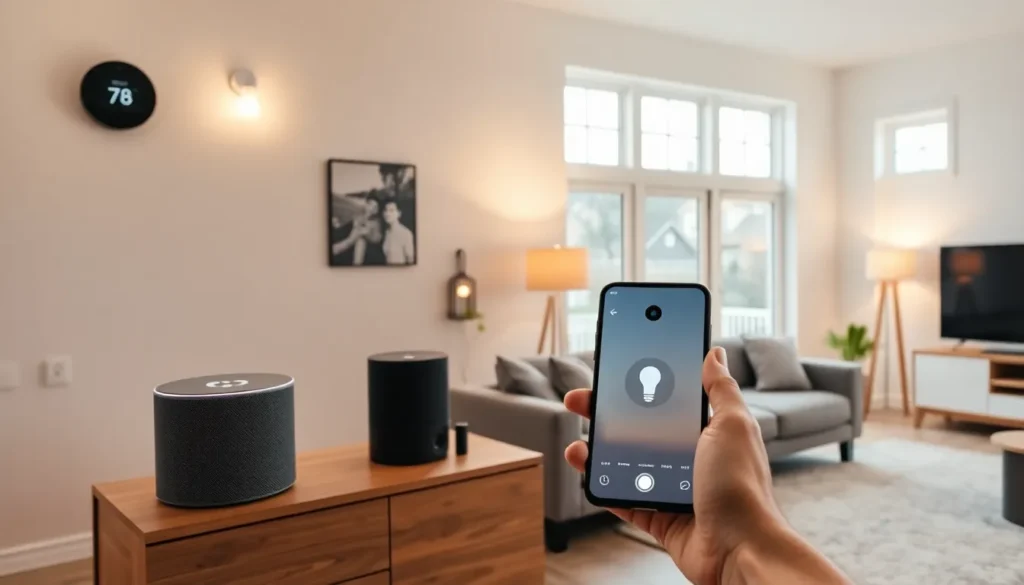
Smart speakers serve as the central hub for most connected homes. Devices like the Amazon Echo, Google Nest Audio, and Apple HomePod respond to voice commands and control other smart home devices throughout the house.
These speakers do more than play music. They answer questions, set timers, read the news, and manage shopping lists. The real magic happens when they connect to other top smart home devices, users can dim the lights, adjust the thermostat, or lock the doors without lifting a finger.
Amazon’s Alexa currently leads the market with the largest library of compatible devices and skills. Google Assistant offers superior search capabilities and natural language processing. Apple’s Siri provides tight integration with iPhone and iPad ecosystems.
Prices range from $30 for basic models to $300 for premium speakers with superior sound quality. Most households find that a mid-range option between $50 and $100 delivers excellent performance and value.
Placement matters too. A central location allows the microphones to pick up commands from multiple rooms. Many users eventually add multiple speakers throughout their homes for whole-house coverage.
Smart Lighting Systems
Smart lighting ranks among the most popular entry points into home automation. These systems let users control brightness, color, and scheduling through apps or voice commands.
Philips Hue remains the industry standard for smart bulbs. The starter kits include a bridge that connects to home Wi-Fi and several bulbs that produce millions of colors. Competitors like LIFX and Wyze offer similar features at lower price points, some without requiring a separate hub.
The benefits extend beyond convenience. Smart lights can simulate occupancy when homeowners travel, potentially deterring break-ins. They can wake users gradually with sunrise simulations. They can sync with movies and music for immersive entertainment experiences.
Energy savings add up over time. LED smart bulbs use 75% less energy than traditional incandescent bulbs. Scheduling features ensure lights turn off automatically when rooms are empty.
Installation is straightforward for most smart bulbs, just screw them into existing fixtures. Smart switches offer another option: they replace wall switches and control any bulb in the circuit. This approach works well for fixtures with multiple bulbs or hard-to-reach locations.
Top smart home devices in the lighting category typically cost between $15 and $60 per bulb. Starter kits with multiple bulbs and a hub run from $80 to $200.
Smart Thermostats for Energy Efficiency
Smart thermostats learn household patterns and adjust temperatures automatically. They represent one of the fastest-returning investments among top smart home devices.
The Nest Learning Thermostat pioneered this category. It tracks when residents leave and return, then adjusts heating and cooling accordingly. The ecobee SmartThermostat includes a room sensor that monitors temperature in multiple locations. The Honeywell Home T9 offers similar features with a more traditional interface.
Energy savings average 10-15% on heating and cooling bills, according to manufacturer studies. For most households, that means the device pays for itself within two years.
Remote access proves invaluable. Users can adjust home temperature from anywhere using smartphone apps. Forgot to turn down the AC before a week-long trip? No problem, just open the app and fix it.
Smart thermostats also integrate with other devices. They can lower the temperature automatically when smart locks detect everyone has left. They can pause heating when smart sensors detect an open window.
Installation requires some DIY comfort. Most homes with standard HVAC systems can complete the process in under an hour. Homes with older or unusual heating systems may need professional installation.
Prices range from $130 for basic Wi-Fi thermostats to $250 for premium models with all the bells and whistles.
Smart Security Cameras and Doorbells
Smart security devices give homeowners eyes on their property around the clock. Video doorbells and security cameras have become essential top smart home devices for safety-conscious households.
Ring Video Doorbell leads the doorbell market. It shows visitors in real-time through smartphone apps and records all motion events. Nest Doorbell offers superior video quality and facial recognition. Eufy doorbells store footage locally, avoiding monthly cloud storage fees.
Indoor and outdoor cameras extend coverage beyond the front door. Brands like Arlo, Blink, and Wyze offer wireless options that install in minutes. Most feature night vision, two-way audio, and motion-triggered recording.
Cloud storage subscriptions remain a consideration. Most manufacturers offer free limited storage but charge monthly fees for extended history and advanced features. Plans typically run $3 to $10 per month per device, or $100 to $200 annually for whole-home coverage.
Privacy deserves attention too. Users should secure their accounts with strong passwords and two-factor authentication. Placing cameras thoughtfully respects neighbors’ privacy while protecting the property.
Prices for quality video doorbells start around $100. Security cameras range from $30 for budget models to $300 for premium options with 4K resolution and advanced AI features.
Smart Plugs and Switches
Smart plugs offer the simplest way to add intelligence to existing devices. They turn ordinary appliances into smart home devices with minimal investment.
These small adapters plug into standard outlets and connect to home Wi-Fi. Users can then control whatever’s plugged in through apps or voice commands. Lamps, fans, coffee makers, and space heaters become controllable from anywhere.
Top smart home devices in this category include offerings from TP-Link Kasa, Amazon, and Wemo. Most cost between $10 and $25 per plug, making them affordable starting points for smart home beginners.
Scheduling features add real value. A smart plug can turn on the coffee maker every morning at 6 AM. It can power down entertainment centers completely at bedtime, eliminating vampire power draw. It can turn on lights at sunset and off at sunrise.
Energy monitoring comes standard on many smart plugs. Users can track exactly how much electricity individual devices consume. This data often reveals surprising energy hogs that deserve replacement or reduced use.
Smart switches replace traditional wall switches for permanent installations. They work with any load on the circuit and look cleaner than plugs. Installation requires basic electrical knowledge and comfort working with household wiring.
For renters or those avoiding electrical work, smart plugs deliver most of the same benefits without any permanent changes.


