
In a world where smart homes are becoming the norm, the last thing anyone wants is a power outage to throw a wrench in their high-tech haven. Imagine your smart fridge suddenly going dark while your favorite show buffers endlessly. Not ideal, right? That’s where an Uninterruptible Power Supply (UPS) steps in like a superhero for your gadgets, ensuring they stay powered up and ready to go, even when the lights go out.
With a UPS, homeowners can protect their smart devices from unexpected blackouts and surges, keeping everything running smoothly. It’s not just about convenience; it’s about peace of mind. So, whether it’s preserving the last slice of pizza in your smart fridge or ensuring your security system stays online, investing in a UPS for your smart home is a no-brainer. Let’s dive into why this little gadget deserves a spot in your tech arsenal.
Overview of UPS for Smart Home
UPS units play a crucial role in smart homes, ensuring continuous power supply during outages. When the electricity goes out, these systems help maintain the functionality of essential devices. Homeowners rely on them to keep appliances, security systems, and even smart assistants operational.
Not every UPS suits all home setups. Different configurations exist to meet specific needs. High-capacity models support more devices while smaller units cater to basic requirements. Identifying the right UPS size is vital for optimal performance.
Variety in features enhances functionality as well. Some UPS models include surge protection, safeguarding devices from power spikes. Others offer advanced management software, allowing users to monitor power usage. These features add layers of convenience, especially for tech-savvy homeowners.
UPS systems contribute to energy efficiency as well. Users can program devices to run effectively during off-peak hours, reducing electricity costs. By controlling when devices use power, homeowners achieve both savings and reliability.
A well-chosen UPS also supports home automation systems seamlessly. Integration with smart home hubs ensures devices communicate efficiently. This capability enhances overall home management, especially when unexpected outages occur.
Investing in a UPS represents a strategic choice for smart homes. Selecting the right model based on specific needs provides both peace of mind and operational security. A UPS ultimately ensures that daily life continues uninterrupted, making it a vital component of any modern household.
Importance of UPS in Smart Homes
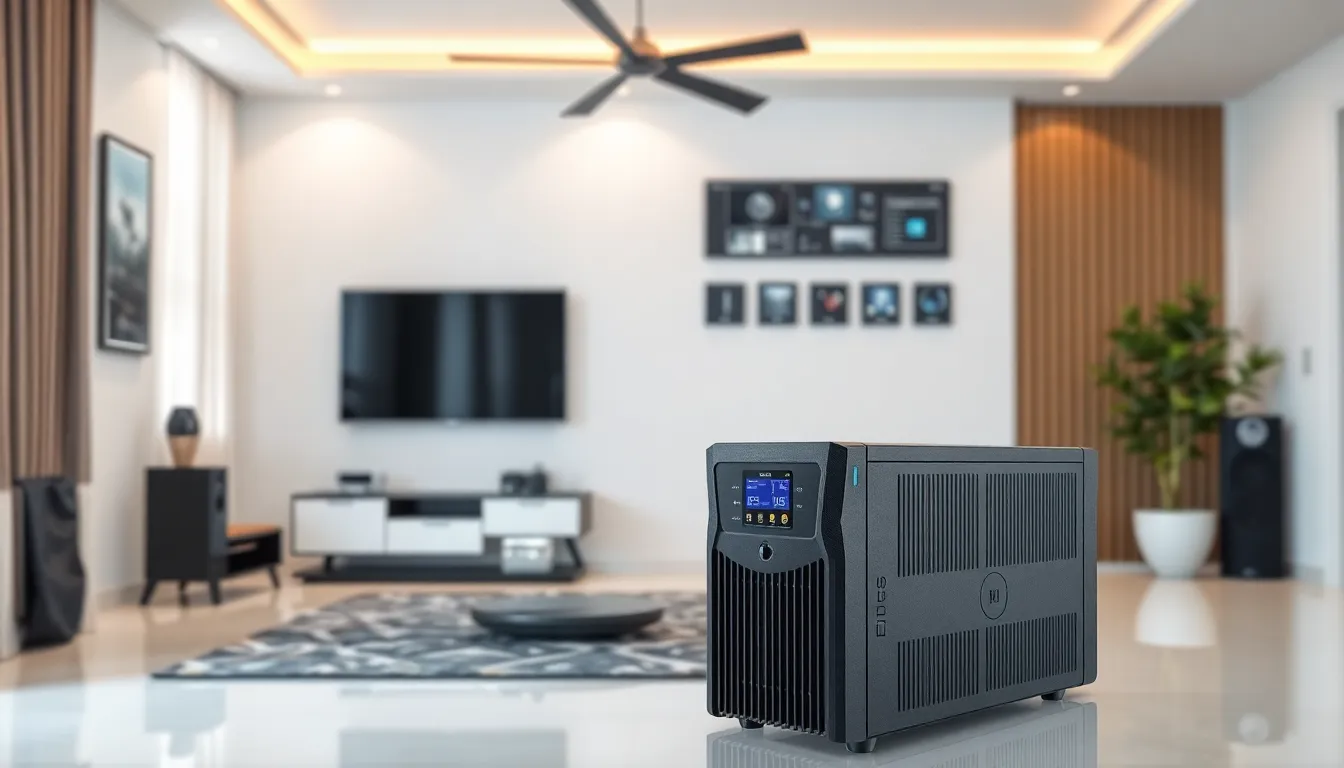
An Uninterruptible Power Supply (UPS) is essential for smart homes, providing stability and safety. It offers protection against sudden blackouts and power disturbances.
Power Outages
Power outages disrupt daily life, affecting everything from lighting to refrigerator functions. A UPS allows devices to continue running when electricity fails. Homeowners can rely on a UPS to keep critical systems operational, maintaining security and convenience. Smart home features, such as alarms and monitoring systems, remain active, preventing potential risks. During extended outages, UPS systems provide enough backup power for users to save work and shut down devices safely. They enhance resilience against unpredictable electrical failures, ensuring that homeowners enjoy uninterrupted service.
Equipment Protection
Protecting devices is crucial in any smart home setup. UPS units guard against voltage spikes, which can damage sensitive electronics. With integrated surge protection, these systems shield valuable appliances like smart TVs and gaming consoles. A UPS provides reliable power conditioning that minimizes the risk of equipment malfunction. In addition, advanced UPS models offer alerts and data logs, keeping homeowners informed about potential issues. Investing in a quality UPS not only prolongs the lifespan of devices but also ensures smooth operation, making it a practical choice for any tech-savvy household.
Types of UPS for Smart Home
Understanding different types of UPS options helps homeowners select the right model for their smart home needs. Each type offers unique features suited to various power management requirements.
Standby UPS
Standby UPS units primarily serve as cost-effective solutions for homes. They provide battery backup during outages, activating when the main power source fails. Many devices, such as routers and security cameras, function well with this type. When power returns, the unit switches back seamlessly. This simple technology makes standby UPS perfect for basic protection against short power interruptions.
Line-Interactive UPS
Line-interactive UPS systems offer advanced features that enhance power quality. These units maintain output voltage through automatic voltage regulation, optimizing power delivery. Homeowners can connect multiple devices, ensuring multiple smart appliances remain functional during outages. This flexibility helps shield sensitive electronics, minimizing the risk of damage from voltage fluctuations. Line-interactive models strike a balance between affordability and performance, fitting well into many home setups.
Online UPS
Online UPS units provide the highest level of protection for critical smart home systems. Operating continuously on battery power ensures a constant, clean electrical supply. This feature proves essential for high-end devices that require reliable performance. Numerous smart appliances benefit from online UPS systems, delivering uninterrupted functionality during outages. Homeowners seeking the best protection for sophisticated automation setups will find online UPS particularly advantageous.
Key Features to Consider
When selecting a UPS for a smart home, important features can influence the effectiveness and convenience of power management.
Capacity and Runtime
Capacity determines how many devices a UPS can support. The runtime indicates how long those devices stay operational during an outage. For instance, selecting a model with sufficient capacity ensures essential devices, like routers and security systems, continue to function. A higher wattage rating typically means increased capability. Users often choose units with at least 600 to 1000 VA for standard smart home setups. Runtime can range from a few minutes up to several hours, depending on the load and battery size. Evaluating both aspects helps homeowners remain prepared for unexpected power failures.
Form Factor
Form factor affects installation options and space requirements. Tower-style UPS units generally fit well in smaller areas, while rack-mounted models suit home server setups. Some users prefer compact designs for discreet placement, whereas others may need larger units for greater capacity. Understanding space constraints plays a vital role in ensuring the right fit for a home. Many manufacturers offer slim models for limited space environments. Assessing where the UPS will reside and its accessibility aids in selecting the ideal form factor.
Outlets and Connectivity
Outlets and connectivity options significantly impact device management. Most UPS units provide a combination of standard and surge-protected outlets to accommodate various devices. A good practice involves choosing models with extra outlets for future expansion. Additionally, connectivity options like USB ports and network management interfaces enhance communication between devices. Smart features, such as alert notifications via mobile apps, improve monitoring capabilities. Ensuring adequate outlets and advanced connectivity options allows for effective power management in a smart home environment.
Popular UPS Models for Smart Homes
Several UPS models are popular among smart homeowners, catering to various needs and preferences.
- APC Back-UPS Series: Known for reliability, this series offers models ranging from 600 to 1500 VA, perfect for basic to moderate setups. These units provide battery backup and surge protection, ensuring essential devices run smoothly during outages.
- CyberPower CP1500PFCLCD: This line-interactive UPS supports up to 1500 VA, featuring a pure sine wave output ideal for sensitive electronics. Homes with gaming consoles or audio equipment benefit from its numerous outlets and LCD display for real-time monitoring.
- Eaton 5S Series: Compact and efficient, Eaton’s 5S models range from 500 to 1500 VA. This series stands out with automatic voltage regulation, ensuring consistent power delivery even during fluctuations, perfect for home offices with computers.
- Tripp Lite SmartPro: Available in various sizes, these units effectively handle higher capacities, making them suitable for extensive smart home networks. Their advanced networking features enhance device management and monitoring.
- Vertiv Liebert PSI5: As a premium choice, this online UPS guarantees a clean, consistent power supply, vital for high-end appliances. With features like USB connectivity and energy-saving capabilities, it suits tech-savvy households committed to energy efficiency.
Each model provides unique advantages that cater to specific requirements within smart home environments. When selecting a UPS, homeowners prioritize factors like capacity, runtime, and connectivity options to ensure optimal protection for their devices.
Conclusion
Investing in a UPS for a smart home is a proactive step toward ensuring uninterrupted functionality and security. With the ability to protect against power outages and surges, a UPS becomes an essential component for maintaining the performance of critical devices. Homeowners can enjoy peace of mind knowing their systems remain operational during unexpected electrical failures.
Choosing the right UPS model tailored to specific needs enhances resilience and efficiency. Whether opting for standby, line-interactive, or online systems, each type offers unique features that cater to various power management requirements. By prioritizing capacity, runtime, and connectivity, homeowners can effectively safeguard their smart home investments, ensuring a seamless living experience.