

In today’s fast-paced world, smart home connectivity is transforming the way people live. With a simple command or tap on a screen, homeowners can control everything from lighting to security systems, creating an environment that’s both comfortable and efficient. This technology not only enhances convenience but also promotes energy savings and improved security.
As more devices become interconnected, understanding smart home connectivity becomes essential. It’s not just about convenience; it’s about creating a seamless ecosystem that works together. From smart speakers to thermostats, the possibilities are endless, and the benefits are clear. Embracing this technology can lead to a smarter, more responsive home that adapts to individual needs and preferences.
Understanding Smart Home Connectivity
Smart home connectivity refers to the integration of various devices within a home network that allows for remote management and automation. This technology streamlines control over home functions, enhancing user experience and efficiency.
Definition of Smart Home Connectivity
Smart home connectivity involves linking devices like lights, thermostats, security cameras, and appliances to a central hub or the internet. These devices communicate through wireless protocols such as Wi-Fi, Zigbee, or Z-Wave. A connected home enables homeowners to monitor and control their devices from smartphones or voice assistants.
Importance in Modern Living
Smart home connectivity plays a crucial role in modern living by providing enhanced convenience and efficiency. It allows users to automate routines, such as adjusting lighting based on time or controlling temperature preferences remotely. Additionally, interconnected devices contribute to energy savings, with smart systems optimizing power usage. Enhanced security is another benefit, as users can monitor their homes in real-time and receive alerts on suspicious activities.
Key Technologies Behind Smart Home Connectivity
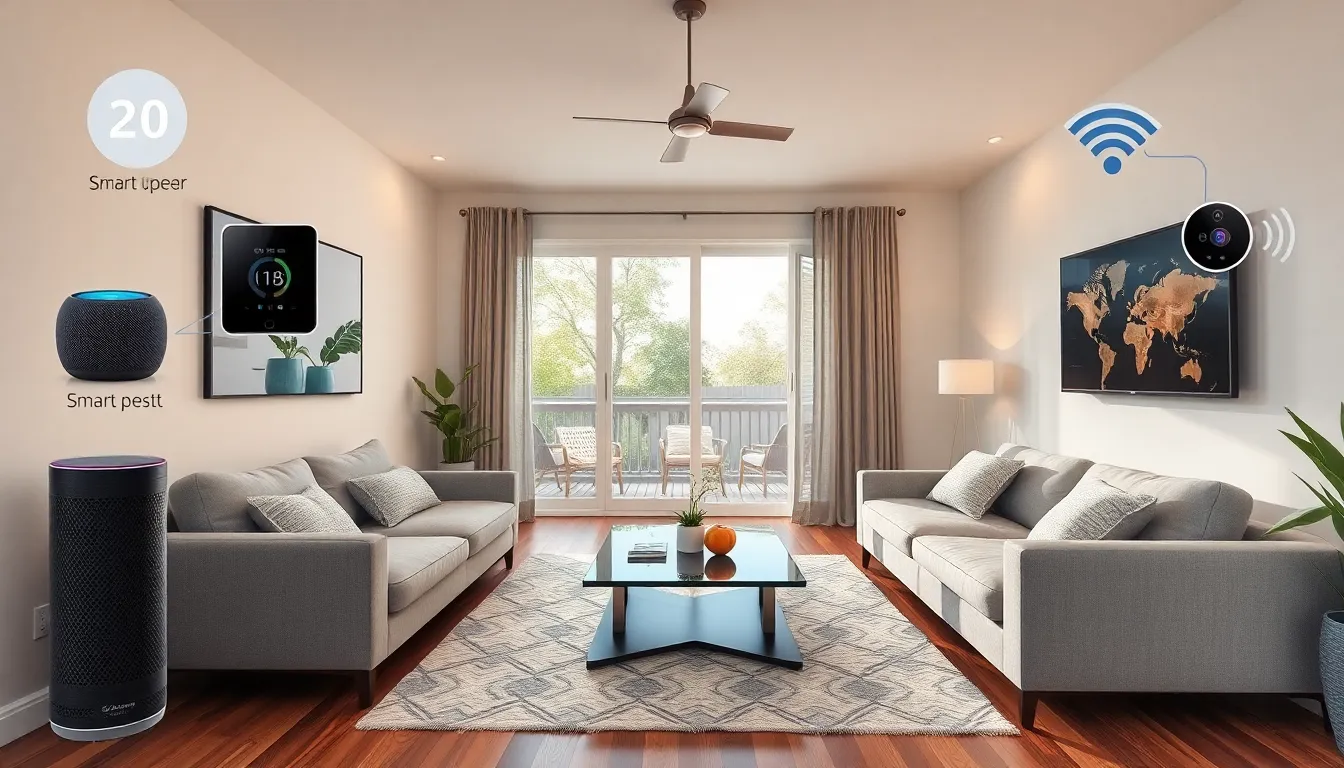
Smart home connectivity relies on multiple technologies that enable seamless communication between devices. This section highlights significant technologies powering smart home systems.
Wi-Fi Networks
Wi-Fi networks serve as a primary backbone for smart home connectivity. They allow devices like cameras, speakers, and smart appliances to connect to the internet. Wi-Fi technology supports high data transfer speeds, ensuring smooth operation for bandwidth-heavy devices. Most smart home devices operate on 2.4 GHz or 5 GHz bands, providing flexibility for varying range and speed needs. As household devices increase, using a robust router enhances performance and connectivity.
Zigbee and Z-Wave
Zigbee and Z-Wave function as low-power wireless protocols designed specifically for smart home devices. Zigbee operates at 2.4 GHz, allowing for extensive device connections across larger areas without significant power consumption. Z-Wave utilizes sub-1 GHz frequencies, which provides better penetration through walls and reduces interference from other devices. Both protocols support mesh networking, improving signal strength and extending the range by allowing devices to communicate with each other directly. They ensure reliable communication among smart home devices, enhancing overall system efficiency.
Bluetooth and Thread
Bluetooth technology enables direct communication between devices over short distances. This includes connecting smartphones to smart locks or speakers without needing a central hub. Bluetooth Mesh extends capabilities by allowing devices to relay messages across larger networks, making it suitable for smart homes. Thread, on the other hand, is a newer protocol designed for low-power, secure communication among smart devices. It creates a self-healing mesh network that maintains connections even if one device fails. Both technologies contribute to inter-device communication, enhancing user experience in smart home ecosystems.
Benefits of Smart Home Connectivity
Smart home connectivity offers a range of advantages for homeowners, enhancing daily living through automation and integration. The following sections outline the key benefits of this technology.
Enhanced Convenience
Enhanced convenience simplifies daily tasks through automation. Homeowners can control multiple devices remotely, manage lighting schedules, and access security settings via smartphones or voice commands. Integration with voice assistants allows for hands-free operation, while smart devices can work together. For instance, smart thermostats can adjust based on users’ habits, and smart locks can grant access to guests automatically when they arrive. This level of connectivity streamlines operations and enhances comfort in everyday life.
Improved Energy Efficiency
Improved energy efficiency reduces utility costs and environmental impact. Smart home devices can monitor energy usage in real-time, providing insights into patterns. For example, smart thermostats optimize heating and cooling settings based on occupancy, while smart lights can adjust brightness or turn off automatically in unoccupied rooms. By implementing energy-saving schedules and automating controls, homeowners experience significant reductions in energy waste. Studies indicate that smart home technologies can achieve energy savings of up to 30%, contributing to both economic and environmental benefits.
Challenges and Considerations
Smart home connectivity presents various challenges that must be understood to optimize user experience. Key concerns include security vulnerabilities and compatibility issues among devices.
Security Concerns
Security concerns are paramount when integrating smart home devices. Each connected device creates potential entry points for cyberattacks. Devices without adequate encryption or outdated firmware can be targeted by hackers, compromising personal data and home safety. According to the FBI, smart home devices may be vulnerable to breaches, resulting in privacy violations or unauthorized access. Implementing strong, unique passwords for each device, enabling two-factor authentication, and regularly updating software enhances security against these risks.
Compatibility Issues
Compatibility issues arise frequently in smart home ecosystems. Devices from different manufacturers may use varying communication protocols, hindering seamless integration. For example, a smart thermostat may not communicate effectively with a particular brand of smart lights, limiting automation potential. As most users prefer a cohesive system, selecting devices that support open standards like Zigbee or Z-Wave can mitigate compatibility concerns. Researching compatibility before purchasing ensures a more integrated, functional smart home setup.
Future Trends in Smart Home Connectivity
Advancements in technology continue to shape the future of smart home connectivity. Two key trends include the integration with artificial intelligence (AI) and machine learning, alongside the expansion of Internet of Things (IoT) devices.
Integration with AI and Machine Learning
Integration with AI and machine learning enhances the intelligence of smart home systems. AI algorithms analyze data collected from users’ habits, preferences, and environmental conditions. Through this analysis, systems adapt and optimize device performance based on personalized usage patterns. For example, smart thermostats learn preferred temperature settings and suggest adjustments for energy efficiency. Additionally, AI-powered voice assistants improve user interaction by providing contextual responses to commands, streamlining everyday tasks. The trend towards AI integration enables proactive home management, turning homes into responsive environments that cater to individual needs.
Expansion of IoT Devices
The expansion of IoT devices contributes significantly to smart home connectivity growth. The integration of more devices—from security cameras to kitchen appliances—enhances the potential for seamless automation. It’s estimated that by 2025, there will be over 75 billion IoT devices globally. Increased device variety promotes diverse applications, allowing users to customize their smart home ecosystems. Moreover, new devices leverage standardized communication protocols like Matter, ensuring compatibility across brands and enhancing user experience. This trend creates an interconnected network that not only simplifies control but also improves compatibility and functionality, setting the stage for greater automation and efficiency in home management.
Smart home connectivity is reshaping the way people interact with their living spaces. By integrating devices and automating routines homeowners can enjoy a level of convenience and efficiency previously unattainable. The benefits extend beyond mere comfort; energy savings and enhanced security are significant advantages that come with smart technology.
As the landscape of smart homes continues to evolve with advancements in AI and IoT, homeowners will find even more innovative solutions tailored to their lifestyles. Embracing this technology not only simplifies daily tasks but also promotes sustainable living. With the right approach to security and compatibility, smart home connectivity can create a seamless and responsive environment that meets individual needs. The future of home management is bright and full of possibilities.