

Imagine a world where your front door knows when you’re home, and it doesn’t need a crystal ball to figure it out. Smart door sensors are revolutionizing home security, turning ordinary doors into tech-savvy sentinels. These nifty gadgets don’t just sit there looking pretty; they alert homeowners to movement, monitor entry points, and even send notifications straight to your phone. It’s like having a personal doorman who never takes a coffee break.
But wait, there’s more! Smart door sensors also add a layer of convenience that’ll make you wonder how you ever lived without them. Forget fumbling for keys in the dark or worrying about whether you left the door unlocked. With these sensors, peace of mind is just a tap away. So, let’s dive into the world of smart door sensors and discover how they can transform your home into a fortress of modern technology.
Overview Of Smart Door Sensors
Smart door sensors play a crucial role in enhancing home security and convenience. These devices detect movement and send notifications to homeowners when someone approaches their entry points. Offering real-time alerts, smart door sensors act like personal doormen, providing an extra layer of protection.
Designed for seamless integration, many smart door sensors connect to home networks using Wi-Fi or Bluetooth technology. Users control these sensors through mobile applications, making adjustments simple and user-friendly. Customizable settings also allow homeowners to set specific alerts and respond to various scenarios, such as package deliveries or unexpected visitors.
Various types of smart door sensors exist, including motion sensors and contact sensors. Motion sensors trigger alerts when they detect movement from individuals or pets nearby. Contact sensors monitor door status, notifying homeowners when doors open or close.
The convenience of smart door sensors extends beyond security. Homeowners use these devices to simplify daily tasks. For instance, smart sensors can unlock doors automatically when users approach, eliminating the need for keys. They enhance accessibility for individuals with mobility challenges as well.
Popular brands in the smart door sensor market include Ring, August, and Schlage. Each brand offers unique features to meet different customer needs. Homeowners can select devices based on functionality, design, and compatibility with existing home security systems.
By utilizing smart door sensors, homeowners experience peace of mind. These tools mitigate risks associated with unauthorized entry while providing a modern solution to everyday challenges. Adopting smart door sensors transforms any home into a secure, tech-savvy environment.
Types Of Smart Door Sensors
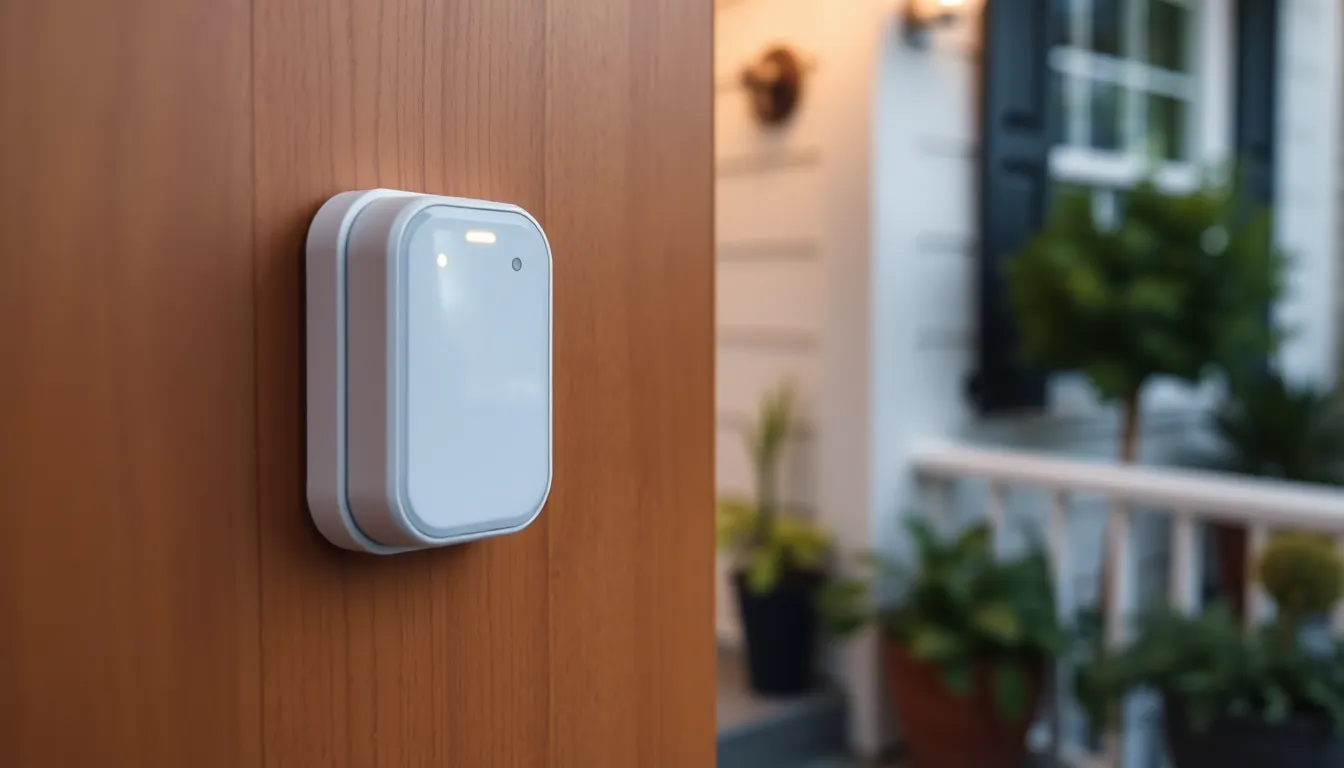
Smart door sensors come in various types, each designed to meet specific security needs. Understanding these categories helps homeowners choose the best option for their situation.
Wireless Sensors
Wireless sensors offer flexibility and easy installation. They require no complicated wiring, making them ideal for renters or DIY enthusiasts. Battery-operated devices provide convenience but require regular battery checks. Devices like the Ring Video Doorbell use wireless technology to send alerts directly to smartphones. These sensors typically communicate via Wi-Fi or Zigbee, ensuring real-time updates on entry points. Homeowners enjoy simple setups with fewer obstacles, allowing for quick access to enhanced security features.
Wired Sensors
Wired sensors provide a stable and continuous power source. They connect directly to a home’s electrical system, eliminating the need for battery replacements. This option often results in a more reliable connection, minimizing disruptions in monitoring. Wired devices integrate well with existing security systems, offering comprehensive coverage throughout the property. Options like wired contact sensors usually function effectively for doors and windows, offering seamless security integration. Homeowners appreciate the reduced maintenance needs and consistent performance associated with wired installations.
Benefits Of Smart Door Sensors
Smart door sensors provide significant benefits that enhance both security and convenience for homeowners.
Enhanced Security
Smart door sensors significantly improve home security. They detect unauthorized movements and send instant alerts to homeowners. With the ability to monitor entry points, these sensors act as a first line of defense against intrusions. Many devices feature customizable settings, allowing alerts for specific situations, such as delivery notifications or unexpected visitors. Additionally, integration with security cameras increases effectiveness, enabling homeowners to view real-time footage alongside sensor alerts. Popular brands, like Ring and August, prioritize security features, making them reliable choices for safeguarding homes. By adopting these technologies, homeowners can enjoy heightened peace of mind.
Convenience And Automation
Convenience plays a key role in smart door sensors’ appeal. Automatic unlocking features streamline access, allowing users to enter without fumbling for keys. These systems often connect to mobile devices, enabling remote locking or unlocking from anywhere. Many sensors include voice control compatibility, enhancing accessibility for all users, including those with mobility challenges. Integration with smart home systems allows for seamless operation, ensuring doors close automatically after a predetermined timeframe. Convenience is prioritized, focusing on elevating the user’s daily experience. Overall, smart door sensors simplify daily routines while providing powerful security measures.
Key Features To Consider
Smart door sensors offer various features that enhance their utility in home security and convenience. Understanding these aspects helps users select the best device for their needs.
Compatibility With Smart Home Systems
Compatibility with smart home systems plays a significant role in selecting a smart door sensor. Devices that integrate with platforms like Amazon Alexa, Google Assistant, or Apple HomeKit provide seamless control and automation. They enhance functionality, allowing users to manage multiple devices from a single app. Choosing a sensor that works well with existing smart devices means easier monitoring and control. Some sensors allow users to create routines, such as locking doors based on specific triggers. The broader the compatibility, the more versatile the smart home ecosystem becomes.
Battery Life And Maintenance
Battery life and maintenance significantly impact the performance of smart door sensors. Ideally, a long battery life reduces the need for frequent replacements, allowing devices to function without interruptions. Many models provide low battery alerts to inform users when it’s time to recharge or change batteries. Regular maintenance ensures optimal performance; users should clean the sensors periodically to prevent dust build-up. Selecting sensors with easy battery access simplifies maintenance tasks. Durable designs also contribute to longevity, ensuring devices withstand various weather conditions while operating efficiently.
Leading Brands And Products
Ring offers a range of smart door sensors designed to enhance home security. Their devices integrate seamlessly with Ring’s video doorbells and security cameras, allowing for cohesive monitoring of entry points.
August stands out with its smart locks and door sensors that deliver convenient keyless entry options. Users appreciate the ability to manage access remotely, making it ideal for package deliveries and guest access.
Schlage focuses on durable smart door sensors that ensure long-lasting performance. Their products often feature built-in alarms that alert homeowners to unauthorized entry attempts.
Wyze provides budget-friendly options in the smart door sensor market. Their sensors are easy to install and work effectively with other Wyze smart home products, creating a comprehensive home security system.
Ecobee combines smart door sensors with their thermostat systems for added energy efficiency. This integration helps users connect climate control and security, enhancing overall home management capabilities.
Nest, now under Google, offers door sensors that work with their home automation ecosystem. Users can benefit from voice control and integration with Google Assistant, streamlining their home security experience.
Eufy delivers reliable sensors with no monthly fees, appealing to budget-conscious consumers. Their products provide essential features like mobile alerts and easy installation, ensuring users can quickly enhance their home security.
All brands emphasize real-time alerts, customizable notifications, and user-friendly mobile applications. Many products provide compatibility with various smart home systems, allowing seamless integration for an improved user experience. Each of these brands focuses on reliability and performance, ensuring homeowners find suitable options for their specific security needs.
Conclusion
Smart door sensors are revolutionizing home security and convenience. By providing real-time alerts and monitoring entry points, these devices empower homeowners to take control of their safety. Their ability to integrate with smart home systems enhances the overall user experience, making daily life easier and more secure.
With various options available, including wireless and wired models, homeowners can choose the perfect fit for their needs. The advancements in technology ensure that these sensors not only protect homes but also simplify access for everyone. As smart door sensors continue to evolve, they’ll play an increasingly vital role in creating secure and efficient living environments. Embracing this technology is a step toward a safer and smarter home.