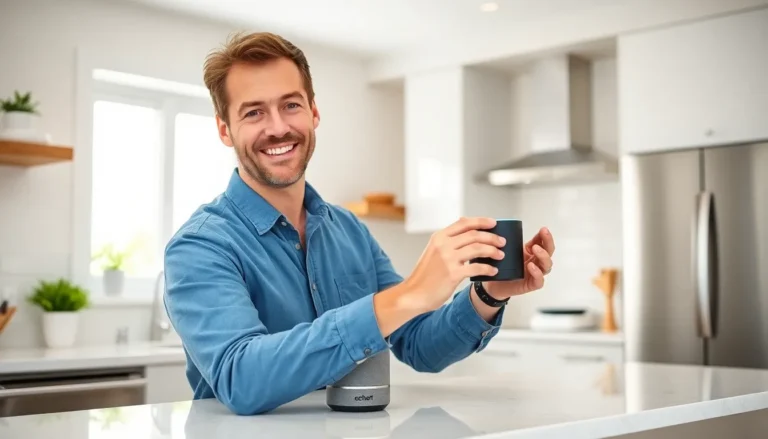

In a world where multitasking is the new Olympic sport, smart assistant routines are the secret weapons everyone needs. Imagine waking up to a cheerful voice that not only brews your coffee but also reminds you of that 8 AM meeting you forgot about—because let’s face it, who doesn’t need a little nudge now and then?
Overview of Smart Assistant Routines
Smart assistant routines streamline daily tasks and improve overall productivity. These customizable sequences allow users to group actions under a single command. Morning routines might include turning on lights, adjusting thermostats, and setting reminders for upcoming events.
Users can automate various household functions, making life easier and more efficient. For instance, a ‘Good Night’ routine can secure the home by locking doors, turning off lights, and setting alarms. These actions enhance convenience while promoting security.
Setting up these routines often requires minimal effort. Most smart assistants offer intuitive interfaces, enabling users to create and manage actions with ease. The flexibility of routines also allows for time-specific commands, such as initiating a coffee brew every weekday morning.
Additionally, smart assistant routines integrate with multiple smart devices. They connect to lights, thermostats, security cameras, and more, creating a cohesive smart home experience. This interconnectedness is vital in today’s tech-driven environment, where seamless integration can significantly enhance user comfort.
Many users report increased satisfaction with their daily structure. Routine automation alleviates decision fatigue, allowing individuals to focus on more pressing tasks. Routine efficiency contributes to improved time management, ultimately leading to a more balanced lifestyle in a busy world.
Such capabilities emphasize the role of smart assistants in managing not just tasks but also overall well-being. Embracing these routines equips users with powerful tools to navigate their daily lives effectively.
Benefits of Using Smart Assistant Routines

Smart assistant routines significantly enhance daily life by improving organization and functionality. These routines provide opportunities for better time management and increased efficiency.
Time Management
Time management becomes effortless with smart assistant routines. Users can set specific times for tasks, such as reminders for meetings, which prevents scheduling conflicts. Automating daily activities, like adjusting thermostats and turning on lights, frees up time for higher-priority tasks. For instance, a morning routine streamlines multiple actions into one command, eliminating the need for manual adjustments. By managing time effectively, individuals experience reduced stress and increased focus on their responsibilities. Task automation minimizes decision fatigue, allowing users to allocate time more wisely across their agendas.
Increased Efficiency
Increased efficiency arises from the automation capabilities of smart assistant routines. Bundling several actions into a single command maximizes productivity during busy days. With just a voice command, users can activate routines that handle various tasks, simplifying their lives. For example, a “Good Night” routine locks doors and turns off lights simultaneously, ensuring a seamless transition to bedtime. Seamless integration with smart devices creates a cohesive environment, making daily operations smoother. Users report accomplishing more with less effort, as repetitive tasks require little to no manual input, enhancing overall productivity.
Popular Smart Assistant Routines
Smart assistant routines streamline daily tasks, making life simpler and more organized. Users often rely on these routines for efficiency and convenience.
Morning Routines
Morning routines set a positive tone for the day. Tasks like turning on lights, brewing coffee, and adjusting the thermostat occur automatically. Many users program these routines to initiate at specific times, ensuring a smooth start. Incorporating reminders for important meetings boosts productivity. By automating these morning activities, individuals save time and reduce decision fatigue.
Evening Routines
Evening routines help transition from a busy day to relaxation. Users can schedule tasks such as dimming lights, locking doors, and playing calming music. Many individuals appreciate the ability to customize these routines to fit their preferences. For example, a “Good Night” routine may include shutting off devices and setting an alarm. These automation features enhance safety and comfort, allowing for a restful evening.
Custom Routines
Custom routines cater to unique lifestyles and preferences. Users design these routines to suit their daily schedules, grouping actions under one command. For instance, a user might create a “Workout” routine that starts music, adjusts lighting, and tracks fitness metrics. Many appreciate the flexibility to modify routines as needs change. With smart assistants, creating effective custom routines becomes simple and intuitive.
Setting Up Smart Assistant Routines
Setting up smart assistant routines transforms daily tasks into automated processes that enhance efficiency and comfort. Users can simplify their lives by customizing routines to fit their specific needs.
Choosing the Right Device
Choosing the right device is crucial for maximizing the benefits of smart assistant routines. Popular options include Amazon Echo, Google Nest Hub, and Apple HomePod. Each device offers unique features and integrations, so selecting one that aligns with personal preferences and existing home setups is essential. Compatibility with smart home systems matters; consider devices that work seamlessly with lights, thermostats, and security systems. Researching user reviews provides insight into performance and ease of use, aiding in the decision-making process.
Step-by-Step Guide
Creating smart assistant routines involves a few straightforward steps. Start by accessing the companion app on your device. Navigate to the routines or automation section, depending on the app. Choose to create a new routine and select the trigger for the routine, such as a specific time or voice command. Next, add actions like turning on lights, playing music, or adjusting the thermostat. It’s beneficial to review the routine for accuracy before saving. Test the routine to ensure it functions as intended, making adjustments as necessary. Following these steps leads to efficient automation that enhances daily life.
Possible Challenges and Solutions
Users may face challenges when setting up smart assistant routines. Compatibility issues can arise if devices are not fully integrated. Checking for compatibility with specific smart devices ensures smoother routine execution.
Another challenge involves customization. Some users might find it difficult to create personalized routines that fit their unique lifestyles. Utilizing pre-set routines as a starting point often simplifies this process, allowing easier modifications.
Interpreting commands also presents a problem for some. Smart assistants sometimes misinterpret user requests, leading to incorrect actions. Regularly reviewing and adjusting voice recognition settings enhances command accuracy.
Privacy concerns consistently surface among users. Data security remains a top priority, prompting many to avoid certain features. Opting for routines that do not require sensitive information mitigates privacy risks.
Managing complexity becomes essential as routines expand. Users can inadvertently complicate their routine, leading to confusion. Focusing on simplicity through key actions helps streamline processes and enhance user experience.
Time constraints may hinder routine execution. Some may struggle to find time for setup or the execution of multiple routines. Implementing time-specific sequences allows users to automate tasks during their schedule seamlessly.
Finally, technical issues can occur, causing disruptions in routine functionality. When faced with connectivity problems, troubleshooting steps can restore device performance. Regular software updates also contribute to maintaining optimal functioning.
Conclusion
Smart assistant routines are transforming the way individuals manage their daily lives. By automating tasks and providing seamless integration with smart devices, these routines promote efficiency and reduce stress. Users can enjoy a more organized schedule while focusing on what truly matters.
The convenience of customizable routines empowers individuals to tailor their smart home experience to fit their unique lifestyles. As technology continues to evolve, the potential for smart assistant routines to enhance productivity and well-being remains significant. Embracing these innovations can lead to a more balanced and fulfilling daily routine.